
How does
quality of life?
In migraine patients with 2–4 prior preventive treatment failures
VYEPTI improved health-related quality of life2*
Mean change from baseline in EQ-5D-5L VAS score in patients with 2–4 prior preventive treatment failures2
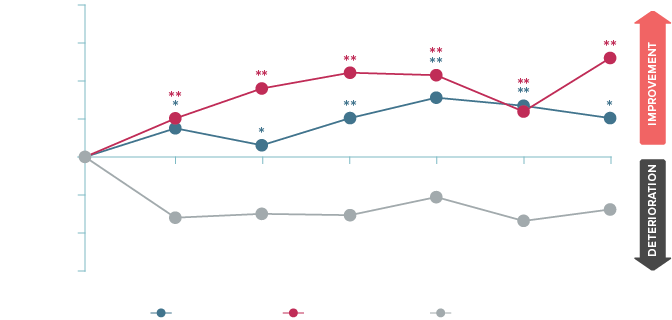
*p<0.05 vs placebo; **p<0.001.
Adapted from Goadsby PJ, et al. Eur J Neurol. 2023.
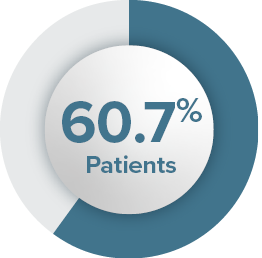
60.7% of patients (n=170/280) with a history of failed treatment reported either “much improved” or “very much improved” on a PGIC scale with VYEPTI2†
VYEPTI 300 mg is not available in the UK.
*Mean baseline EQ-5D-5L VAS scores were 75.9, 74.5 and 74.0 in the VYEPTI 100 mg, 300 mg and placebo groups, respectively. EQ-5D-5L comprises 5 descriptive items (mobility, self-care, usual activities, pain/discomfort and depression/anxiety). In addition, overall health status was rated using a VAS ranging from 0 (worst imaginable health state) to 100 (best imaginable health state). DELIVER studied patients with episodic and chronic migraine with 2–4 prior preventive treatment failures.2
†Both VYEPTI 100 mg and 300 mg improved PGIC score (perceived impact of migraine) at Weeks 4, 12 and 24 compared to placebo (p < 0.0001). At Week 4, 59.0% and 59.4% of patients treated with VYEPTI 100 mg and 300 mg respectively reported “much improved” or “very much improved” on PGIC vs 20.4% patients treated with placebo; at Week 24, the percentages were 60.7%, 64.1% and 25.5% for the respective treatments.2
In patients with prior inadequate response to other anti-CGRP mAbs*
VYEPTI improved elements of daily living3
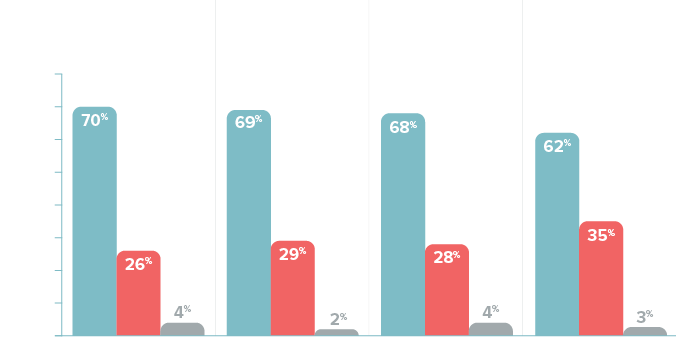
In a real-world study, ~70% of patients reported increased satisfaction with their ability to plan, be productive, and participate in their daily lives3*
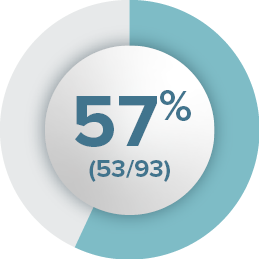
of patients reported higher or much higher confidence in their overall well-being3
*In this real-world study (N=94), 89% of patients had previously used a subcutaneous anti-CGRP mAb, 82% had used onabotulinumtoxinA, 74% had used an oral preventive, and 73% had used a gepant (including atogepant, ubrogepant, and rimegepant). Data shown are from an online patient survey. Self-reported survey data are subject to recall bias, and recall could have been further impacted in the 51% of patients who received ≥5 infusions.3
†Percentages may not add up to 100% due to rounding. Patients were prompted: “Please rate the following statements on different aspects of your life (i.e. your feelings) by placing a checkmark ✓ in the column which most closely fits your opinion: After starting VYEPTI, my satisfaction with…” Choices included: much higher, higher, about the same, lower, and much lower. All assessment data, including demographics, were summarised using descriptive techniques.3
Patient-reported impact on elements of daily living since starting VYEPTI3†
Adapted from Argoff C, et al. J Headache Pain. 2024.
 View Argoff C, et al. J Headache Pain. 2024 Clinical Summary



In migraine patients with 2–4 prior preventive treatment failures
VYEPTI-treated patients significantly improved migraine-related absenteeism, presenteeism and work productivity loss4*
Mean change from baseline in work productivity loss subscores4
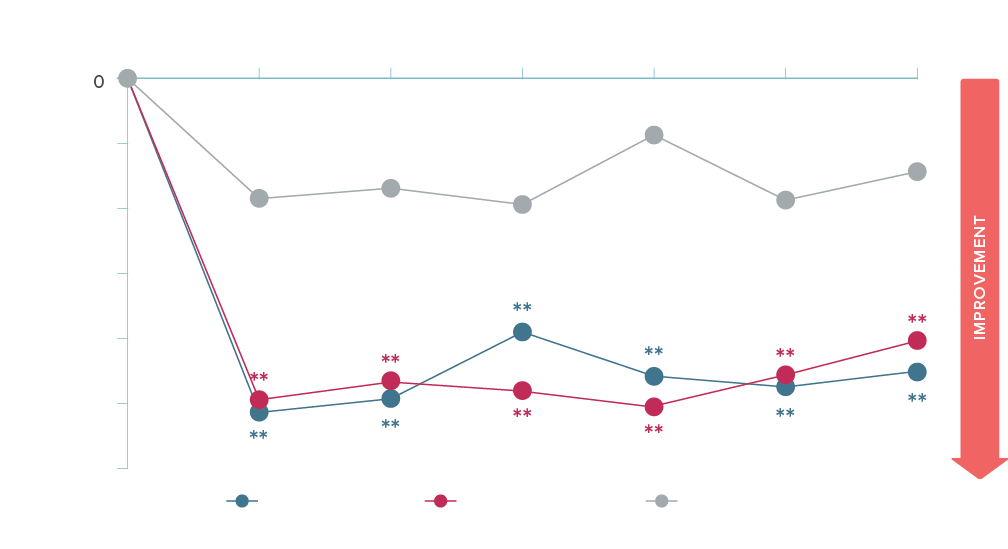
*p<0.05 vs placebo; **p<0.001.
Adapted from Barbanti P, et al. J Headache Pain. 2022.
 View Barbanti P, et al. Eur J Neurol. 2022 Clinical Summary
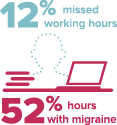
At baseline, patients self-reported mean absenteeism and presenteeism indicating 12% of missed working hours and 52% of working hours worked with migraine4†
*Work productivity loss is a percentage based on patients’ absenteeism and presenteeism
during the preceding 7 days. The WPAI:M comprises 6 items (4 of which are completed by
currently employed patients only) and was administered every 4 weeks to measure effect
of VYEPTI 100 mg and 300 mg on self-reported work productivity (changes from baseline).
Mean WPAI:M subscores at baseline indicated a negative impact of migraine attacks on
work productivity. DELIVER studied patients with episodic and chronic migraine with 2–4
prior preventive treatment failures.4
†Baseline values were assessed prior to the first VYEPTI infusion, covering the
preceding 7 days.4

Go beyond symptom control
VYEPTI may improve work productivity and reduce absenteeism in patients with migraine4
VYEPTI IS GENERALLY WELL TOLERATED IN PATIENTS WITH MIGRAINE1,5

The most common side effects are hypersensitivity reactions, infusion related reaction and fatigue. Most hypersensitivity reactions occurred during infusion and were not serious (reported in ~4% of VYEPTI patients and 2% of placebo patients in clinical studies). Infusion-related reactions occurred infrequently and in similar proportions of VYEPTI and placebo patients (<1%). Fatigue was most frequent on the day of the first infusion, and reported in ~3% of VYEPTI patients and 2% of placebo patients1

The treating healthcare professional should observe or monitor patients during and after the infusion in accordance with normal clinical practice1

What needs to be
considered when
administering
VYEPTI?

Help patients keep a
record of their symptoms
with the VYEPTI Patient
Headache Diary


CONTACT US
LET'S
CONNECT
Schedule a meeting about VYEPTI with your local Lundbeck representative

HERE
TO HELP
Contact us with any general or
product-related queries

STAY
IN TOUCH
To receive information and
updates about VYEPTI,
sign up for promotional
communications from Lundbeck


You are about to leave this site.
You are about to leave this site.
Lundbeck UK has not been involved in the content development and approval of third party websites.
Do you want to continue?