
should VYEPTI be used?
Take the next step forward in migraine treatment with VYEPTI2–6
Real-world data demonstrate that treatment with VYEPTI led to greater reductions in monthly migraine days (MMDs) when used earlier in anti-CGRP mAb-naïve patients vs patients with prior failure to preventive treatments including anti-CGRP mAbs2,3,5
VYEPTI has demonstrated efficacy in episodic migraine (EM), high-frequency episodic migraine (HFEM), and chronic migraine (CM) patients who:

Had prior inadequate response to ≥1 preventive treatments including other anti-CGRP mAbs2-6

Were anti-CGRP mAb-naïve2,3,5
In real world HFEM and CM patients
A greater response was achieved in those who were anti-CGRP mAb-naïve vs those who had prior inadequate response to ≥ 3 preventive treatments2,3
 View Barbanti P, et al. J Neurol. 2025 Clinical Summary
Results from EMBRACE II: Responders at Weeks 21-242*†
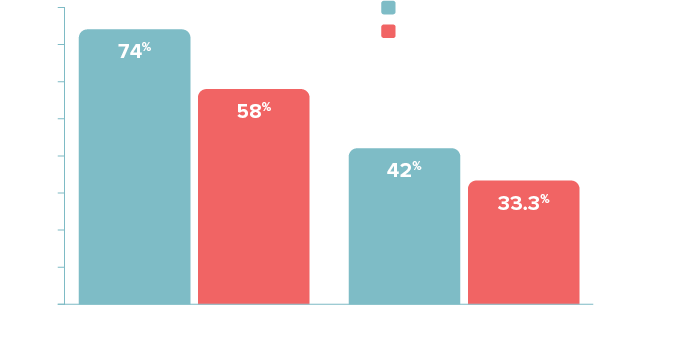
**p<0.001 vs prior failure to anti-CGRP mAbs.
Adapted from Barbanti P, et al. J Neurol. 2025.
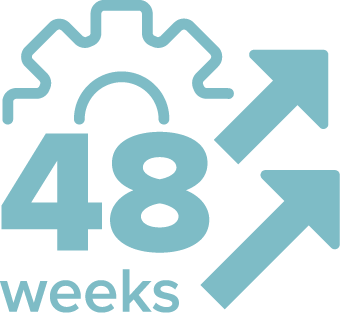
VYEPTI showed sustained and progressively increasing efficacy over 48 weeks in HFEM and CM patients despite substantial disease burden and multiple prior preventive treatment failures including anti-CGRP mAbs (≥50% of patients)3
*In the multicentre, prospective, 24-week, real-world study (EMBRACE II) of patients with HFEM (n=12) and CM (n=62), 32.4% of patients (n=24) had prior treatment failure with anti-CGRP mAbs and 96.5% of patients (n=55) had previously failed onabotulinumtoxinA. Treatment failure was defined as the absence of a clinically meaningful improvement after 3 months, poor tolerability, or the presence of contraindications.2
†One patient was initially prescribed VYEPTI 300 mg and 25 patients (33.8%) escalated their VYEPTI dose from 100 to 300 mg at Week 12.2 VYEPTI 300 mg is not available in the UK.
‡≥50%/≥75%/100% responders: proportion of patients with a ≥50%/≥75%/100% reduction in monthly migraine/headache days vs baseline.2,3
§EMBRACE III: A multicentre, prospective, 48-week, real-world study of patients with HFEM (n=21) and CM (n=103). 51.6% of patients (n=64) had prior treatment failure with anti-CGRP mAbs and 41.9% of patients (n=52) had previously failed onabotulinumtoxinA. Of the 124 patients who had previously failed an anti-CGRP mAb, 63 had failed treatment with a single anti-CGRP mAb (erenumab, n=62; galcanezumab, n=1), while 1 patient had failed two agents (erenumab and galcanezumab, n=1).3
¶30.6% of patients (n=38) received VYEPTI 100 mg every 12 weeks throughout the entire treatment period; following the 100 mg infusion at baseline, 86 patients escalated to 300 mg for one administration (18.6%, n=23), two administrations (27.4%, n=34), or three administrations (23.4%, n=29).3
VYEPTI 300 mg is not available in the UK.
Patient-reported satisfaction with the ability of VYEPTI to impact migraine symptoms4*
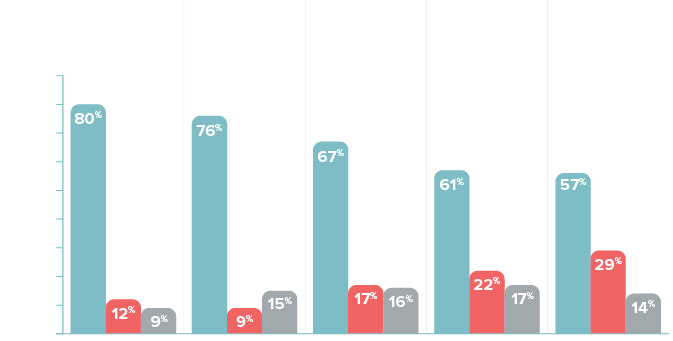
Adapted from Argoff C, et al. J Headache Pain. 2024.
In patients with prior inadequate response to other anti-CGRP mAbs†
VYEPTI alleviated patient-reported chronic migraine symptoms4
 View Argoff C, et al. J Headache Pain. 2024 Clinical Summary

VYEPTI increased the average number of patient-reported “good days”/month by 10, from 8 “good days”/month with other migraine therapies to 18 “good days”/month after starting VYEPTI4*‡
* Percentages may not add up to 100% due to rounding. Patients were prompted: “Please rate how much you agree or disagree with the following statements by placing a checkmark ✓ in the column which most closely fits your opinion: I am satisfied with VYEPTI’s ability to…” Choices included: strongly agree, agree, neutral, disagree, and strongly disagree. All assessment data, including demographics, were summarised using descriptive techniques.4
† In this real-world study (N=94), 89% of patients had previously used a subcutaneous anti-CGRP mAb, 82% had used onabotulinumtoxinA, 74% had used an oral preventive, and 73% had used a gepant (including atogepant, ubrogepant, and rimegepant). Data shown are from an online patient survey. Self-reported survey data are subject to recall bias, and recall could have been further impacted in the 51% of patients who received ≥5 infusions.4
‡ Patients were asked, “On average, how many good days per month did you experience before/after starting VYEPTI? Please indicate the number of days from 1–31.” The definition of “good days” was defined by the individual patient.4



In patients with prior inadequate response to ≥1 other anti-CGRP mAb*
VYEPTI demonstrated efficacy according to
NICE criteria (RWE from the UK)5†
Proportion of patients experiencing ≥30% reduction from baseline in mean MMDs5
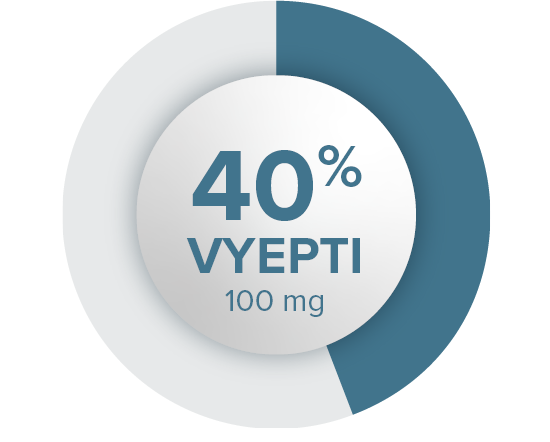
40% of patients (n=32/80) who previously failed to respond to ≥1 anti-CGRP mAb achieved ≥30% reduction from baseline in mean MMDs after the first VYEPTI infusion5
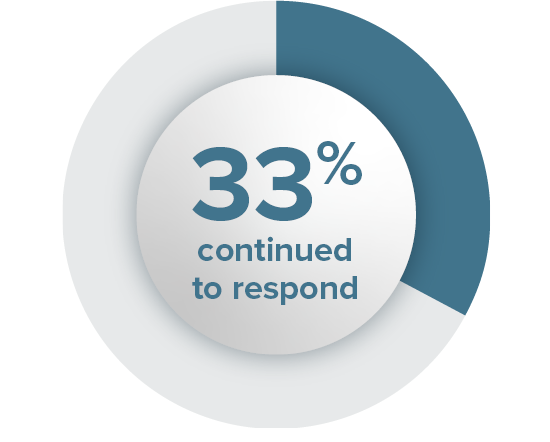
33% of patients (n=26) continued to respond to VYEPTI after the second infusion5
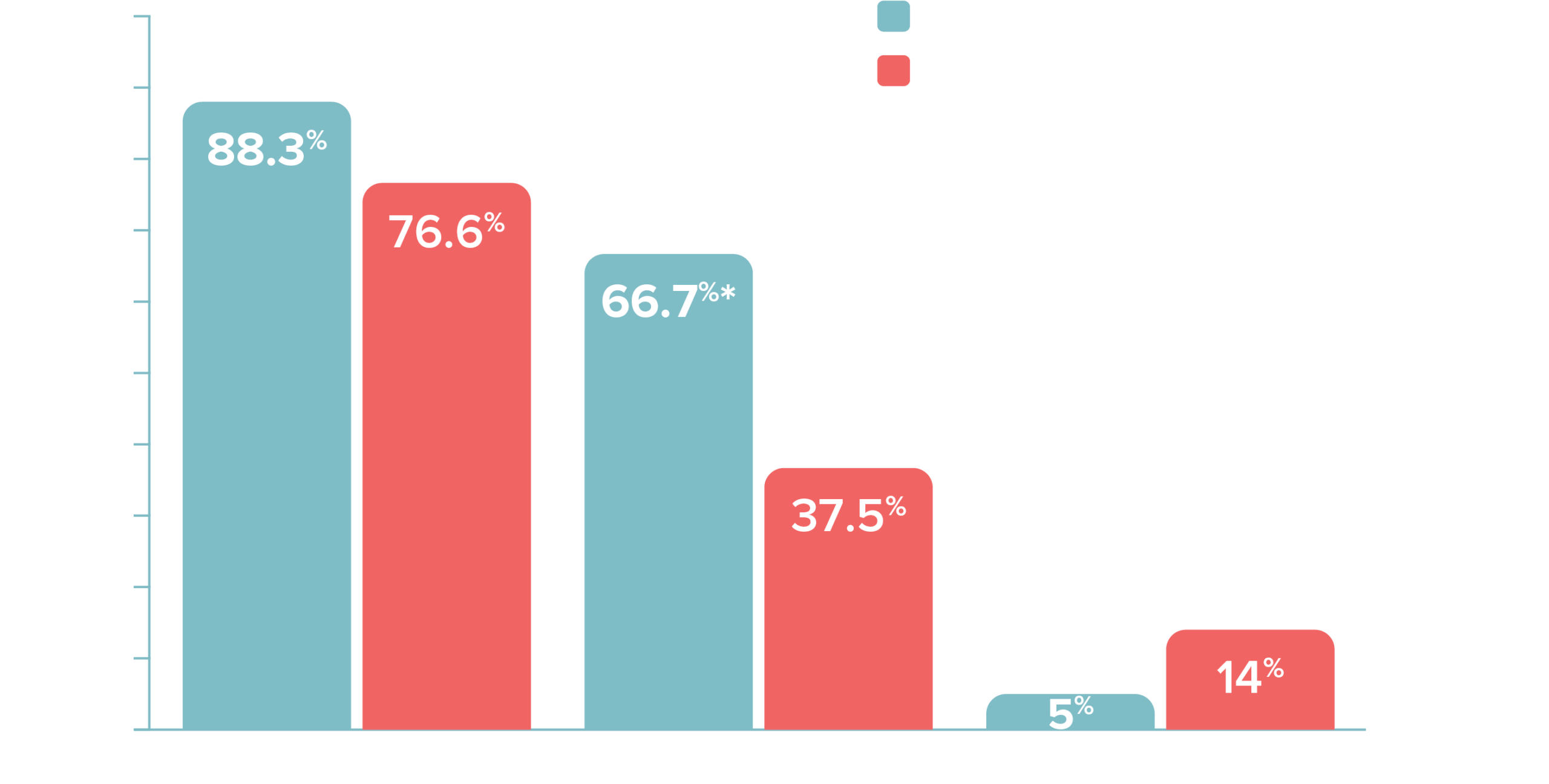
Compared to patients with prior inadequate response to ≥1 other anti-CGRP mAb, VYEPTI achieved a significantly greater response in anti-CGRP mAb-naïve patients5*†
 View Andreou J, et al. J Headache Pain. 2025 Clinical Summary
Responders at Months 3 and 65†
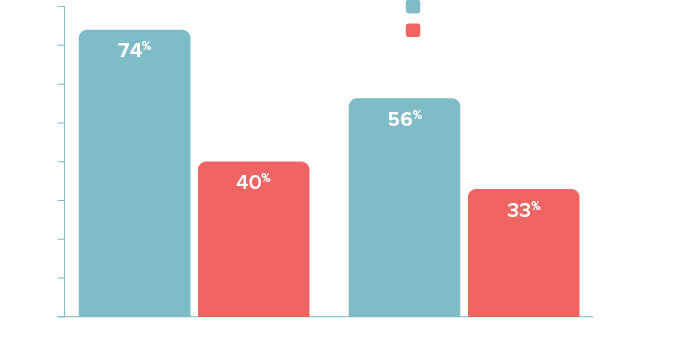
*p<0.001 vs prior failure to anti-CGRP mAbs.
Adapted from Andreou J, et al. J Headache Pain. 2025.

Anti-CGRP mAb-naïve patients were significantly more likely to achieve ≥30% reduction in MMDs with VYEPTI than those who failed to respond to previous anti-CGRP mAbs (p=0.0001)5
*In this real-world study (N=119), 67% of patients (n=80) had failed ≥1 anti-CGRP mAb and 22% (n=26) had failed two anti-CGRP mAbs. 33% (n=39) were naïve to anti-CGRP mAbs.5
†Response was defined as achieving at least a 30% and 50% reduction in migraine days after ≥3 consecutive months of injections respectively for chronic migraine and episodic migraine. At baseline, n=112 patients had chronic migraine and n=7 had episodic migraine.5
VYEPTI IS GENERALLY WELL TOLERATED IN PATIENTS WITH MIGRAINE1,7

The most common side effects are hypersensitivity reactions, infusion related reaction and fatigue. Most hypersensitivity reactions occurred during infusion and were not serious (reported in ~4% of VYEPTI patients and 2% of placebo patients in clinical studies). Infusion-related reactions occurred infrequently and in similar proportions of VYEPTI and placebo patients (<1%). Fatigue was most frequent on the day of the first infusion, and reported in ~3% of VYEPTI patients and 2% of placebo patients1

The treating healthcare professional should observe or monitor patients during and after the infusion in accordance with normal clinical practice1

Discover the efficacy data

CONTACT US
LET'S
CONNECT
Schedule a meeting about VYEPTI with your local Lundbeck representative

HERE
TO HELP
Contact us with any general or
product-related queries

STAY
IN TOUCH
To receive information and
updates about VYEPTI,
sign up for promotional
communications from Lundbeck