
Who are the
for VYEPTI?
VYEPTI. Not every patient. The right patients.
VYEPTI is delivered via a 30-minute IV infusion following dilution in a 100 mL bag of 0.9% sodium chloride for injection, once every 12 weeks1

SCHEDULING
A different rhythm can make all the difference
Some patients may prefer one scheduled visit every 12 weeks over more regular treatment tasks. A quarterly appointment can reduce the burden of remembering or managing more frequent doses and may increase adherence.2

THE INFUSION MOMENT
Time to pause. Not a moment to dread
For the right patient, the infusion visit could feel like a welcome pause. A moment to focus on feeling well, rather than managing what’s wrong.

PEACE OF MIND
One visit. 12 weeks of reassurance
For some patients, knowing prolonged care is in place can bring peace of mind. A quarterly infusion1 allows them to step out of the day-to-day between visits.

CONNECTION
Care that feels personal
Some patients value in-person care delivered by trained healthcare professionals. Scheduled visits create space for conversation, reassurance, and connection.3,4
In patients with prior inadequate response to ≥1 other anti-CGRP mAb*
VYEPTI demonstrated efficacy according to
NICE criteria (RWE from the UK)5†
Proportion of patients experiencing ≥30% reduction from baseline in mean MMDs5
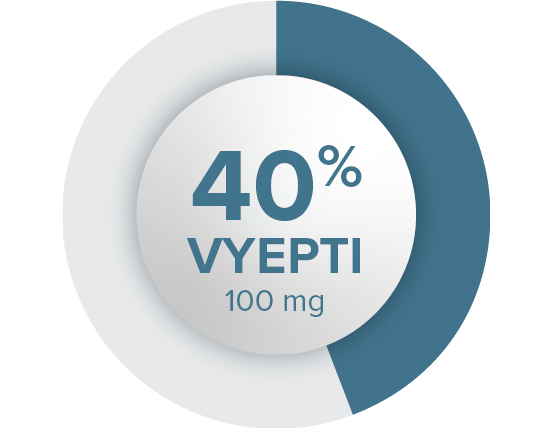
40% of patients (n=32/80) who previously failed to respond to ≥1 anti-CGRP mAb achieved ≥30% reduction from baseline in mean MMDs after the first VYEPTI infusion5
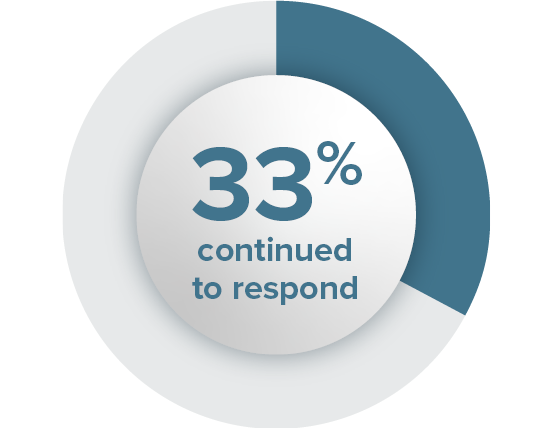
33% of patients (n=26) continued to respond to VYEPTI after the second infusion5
In this UK RWE study, VYEPTI achieved a significantly greater response in CGRP-naïve patients vs patients with prior inadequate response to ≥1 other anti-CGRP mAb5*†
 View Andreou J, et al. J Headache Pain. 2025 Clinical Summary
Responders at Months 3 and 65†
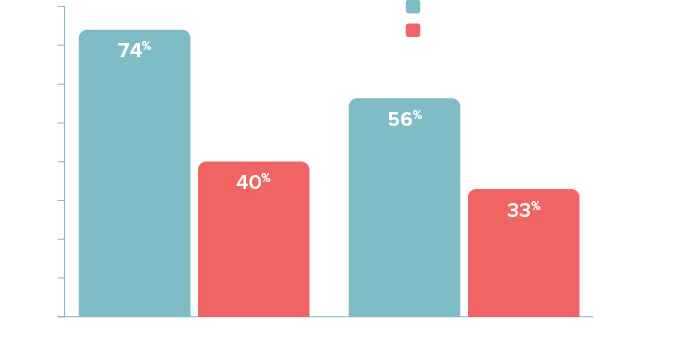
*p<0.001 vs prior failure to anti-CGRP mAbs.
Adapted from Andreou J, et al. J Headache Pain. 2025.

Anti-CGRP mAb-naïve patients were significantly more likely to achieve ≥30% reduction in MMDs with VYEPTI than those who failed to respond to previous anti-CGRP mAbs (p=0.0001)5
*In this real-world study (N=119), 67% of patients (n=80) had failed ≥1 anti-CGRP mAb and 22% (n=26) had failed two anti-CGRP mAbs. 33% (n=39) were naïve to anti-CGRP mAbs.5
†Response was defined as achieving at least a 30% and 50% reduction in migraine days after ≥3 consecutive months of injections respectively for chronic migraine and episodic migraine. At baseline, n=112 patients had chronic migraine and n=7 had episodic migraine.5



Give your patients the confidence to do what
they love, wherever they are
VYEPTI (eptinezumab) is indicated for the prophylaxis of migraine in adults who have at least 4 migraine days per month1

EFFICACIOUS
Reduced frequency of monthly migraine days vs placebo throughout the 12-week dosing period6,7*

SUSTAINED
Sustained migraine prevention over 18 months9‡

FAST ONSET
From Day 1 after infusion8†

USE EARLY
Take the next step forward in migraine treatment and switch to VYEPTI after first sub-optimal response10,11
*Based on primary endpoint data from parallel-group, double-blind, randomised, placebo-controlled efficacy and safety studies in patients with episodic migraine (N=888 in full analysis population; PROMISE-1, NCT02559895) or
chronic migraine (N=1,072 in full analysis population; PROMISE-2, NCT02974153).6,7
†Percentage of patients reporting migraine on Day 1 after infusion was a secondary endpoint measure6,7
‡DELIVER studied patients with episodic and chronic migraine with 2–4 prior preventive treatment failures. Patients who completed the 24-week placebo-controlled period of DELIVER received VYEPTI 100 mg or 300 mg during the 48-week dose-blinded extension period. Patients initially randomised to VYEPTI continued their assigned dose, and patients initially in the placebo group were randomised 1:1 to VYEPTI 100 mg or 300 mg. The extension phase of the DELIVER trial lacked a placebo or active comparator arm.9
VYEPTI IS GENERALLY WELL TOLERATED IN PATIENTS WITH MIGRAINE1,12

The most common side effects are hypersensitivity reactions, infusion related reaction and fatigue. Most hypersensitivity reactions occurred during infusion and were not serious (reported in ~4% of VYEPTI patients and 2% of placebo patients in clinical studies). Infusion-related reactions occurred infrequently and in similar proportions of VYEPTI and placebo patients (<1%). Fatigue was most frequent on the day of the first infusion, and reported in ~3% of VYEPTI patients and 2% of placebo patients1

The treating healthcare professional should observe or monitor patients during and after the infusion in accordance with normal clinical practice1

Discover the clinical data


CONTACT US
LET'S
CONNECT
Schedule a meeting about VYEPTI with your local Lundbeck representative

HERE
TO HELP
Contact us with any general or
product-related queries

STAY
IN TOUCH
To receive information and
updates about VYEPTI,
sign up for promotional
communications from Lundbeck